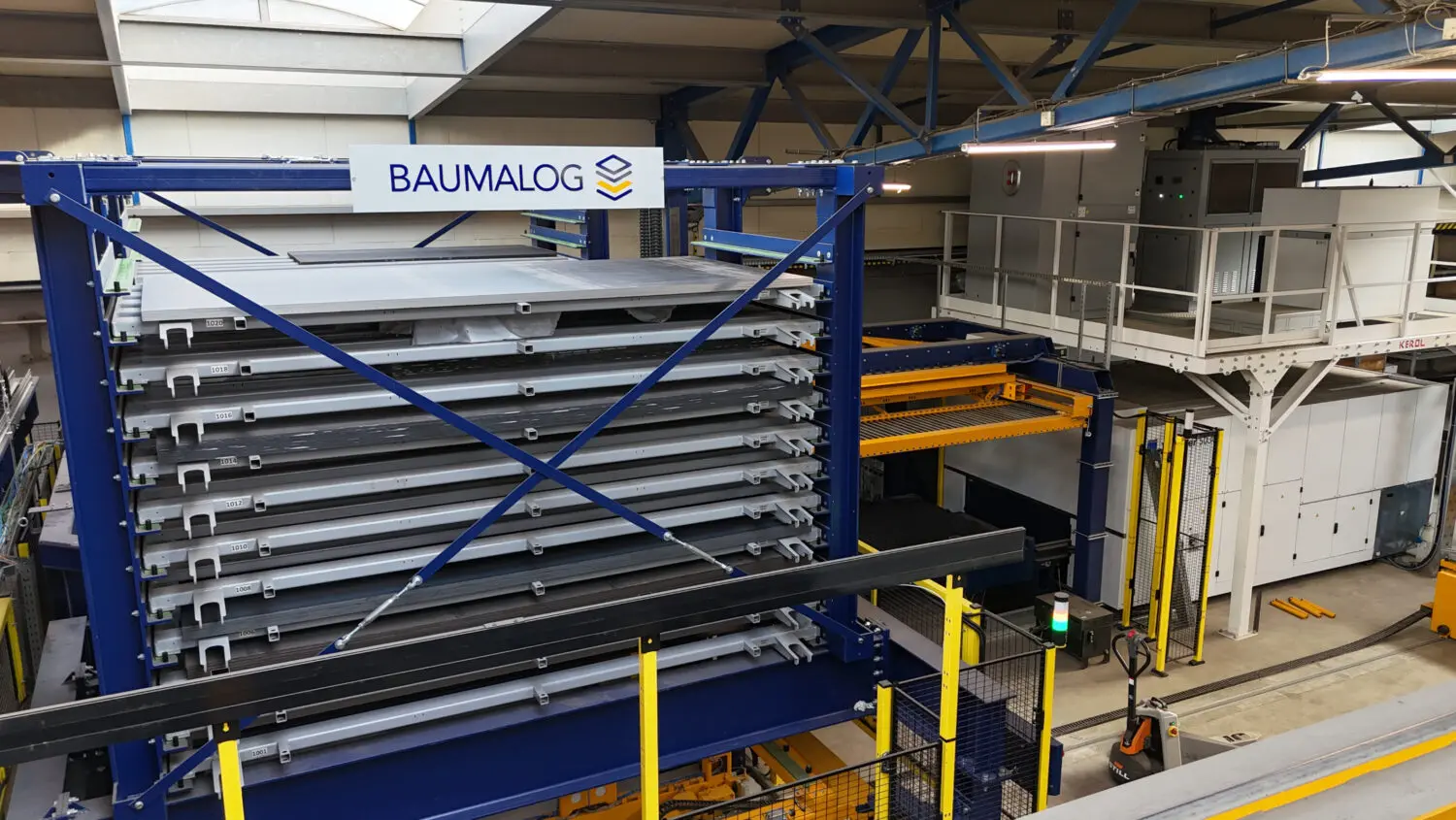
Dual automation of two TRUMPF laser cutters
Automation of two TRUMPF laser cutters using Loader 3015 and MultiLoader systems with a TwinTower automated storage system at Marbo Sport.
The laser cutter processes the prepared queue without constantly bringing in material
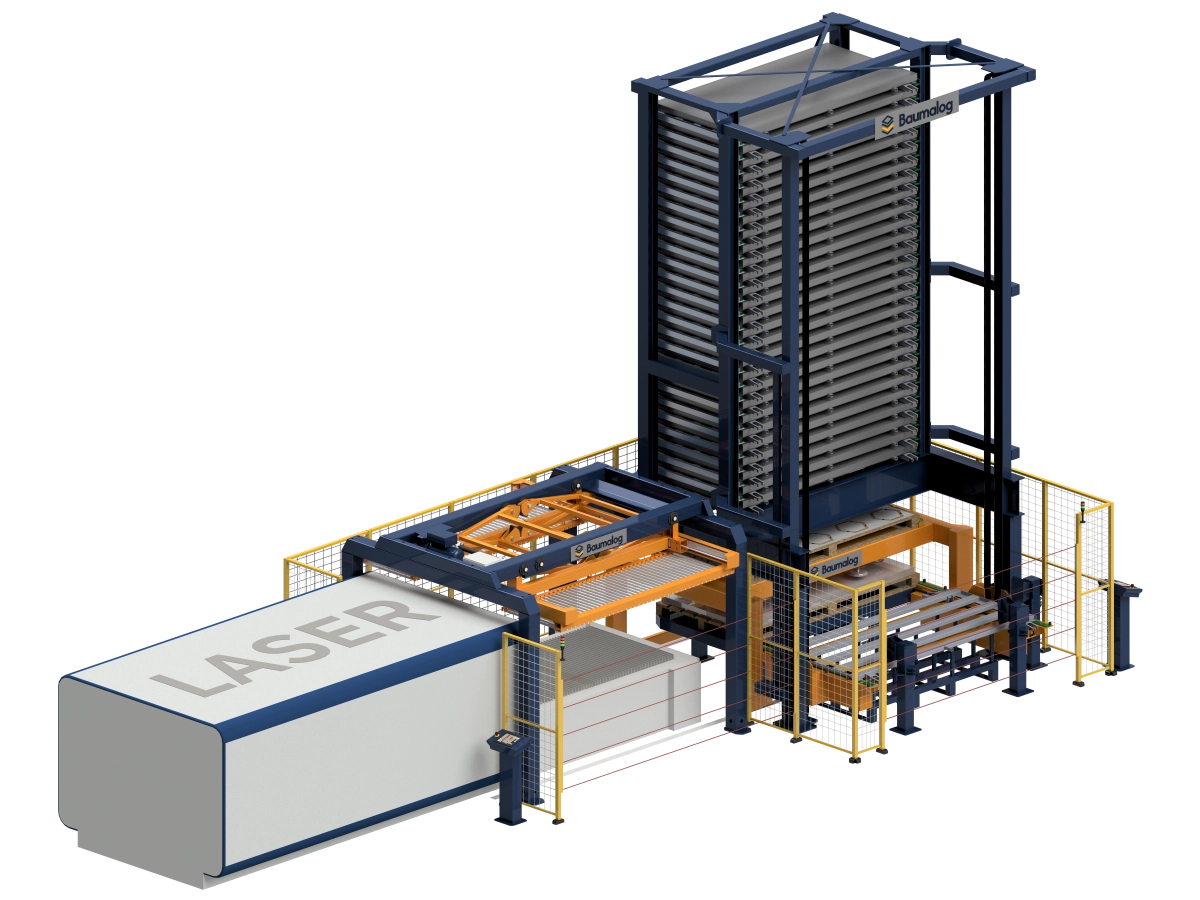
An automated sheet metal storage system, a Loader and one laser cutter work as one production cell. The system itself selects the right shelf, delivers material to the table and collects the cut sheet; the operator replenishes the storage system and sorts parts when it suits them.
1 laser cutter
fully automated
3 layouts
typical storage and Loader configurations
up to 48
sheets per hour
many brands
lasers from different manufacturers
Automatic operation of one laser cutter is most often limited by a lack of material buffer
Automatic sheet exchange alone is not enough if the right material has to be brought in every time and cut sheets collected immediately. The number of jobs that can be done unattended then depends on people, not on the machine.
Sounds familiar?
More sheets cut thanks to automatic access to material
Connecting the storage system with the Loader means the work plan does not end where the manually prepared material ends. The laser cutter processes the queue within what is available in storage.
The laser does not wait for material to be prepared
The storage system automatically selects and delivers the right shelf before the laser cutter finishes the previous program.
Automatic access to different materials
The queue can include different sheet grades and thicknesses: the system fetches them by itself, without changing how work is organized on the shop floor.
Longer operation without constant attention
The degree of autonomy is determined by storage capacity and the number of places for cut sheets, not by the operator's presence at the machine.
Sorting separated from the cutting rhythm
Cut sheets go into a buffer, so the operator collects and sorts them regardless of what the laser cutter is doing at the moment.
Order and a smaller storage area
Vertical sheet metal storage tidies up the space around the laser cutter and reduces forklift traffic in that area of the hall.
The sheet path from the storage shelf to the collection point
The work plan starts a chain of operations: the storage system selects a shelf, the Loader feeds the sheet onto the table, and after cutting it collects the material and puts it in the designated place. Cutting, material transport and part sorting happen in parallel.
1. Task queue
Programs from CAD/CAM go into the laser cutter queue together with information about the required material. The plan can be prepared in advance for a whole shift.
2. Shelf selection in storage
The system itself indicates the shelf with the right sheet grade and thickness, without searching for material or moving pallets.
3. Material delivery
The shelf comes within the Loader's reach. Sheet separation, single-sheet pickup check and thickness measurement confirm that the right material will go onto the table.
4. Loading and cutting
The sheet is placed on the shuttle table, and the laser cutter starts the program right after the table is released by the previous cycle.
5. Unloading
The cut sheet is removed from the table right after the program ends and does not block the next task in the queue.
6. Put-away in storage or a buffer
After cutting, the material goes back to a storage shelf or to a designated collection point, from where the operator takes it at their own pace.
Three processes at the same time
The laser cutter cuts, the storage system prepares the next material and the operator sorts the previously cut sheet. None of these activities has to wait for the others.
What determines the degree of autonomy
Unattended operating time depends on the storage capacity and the number of places for cut sheets. We choose both values to suit the actual order mix.
Three typical storage and Loader layouts matched to the hall layout and laser cutter orientation
The arrangement of the storage system, Loader and laser cutter determines how much space the cell takes up and how material is transported. Below are the layouts we implement most often.
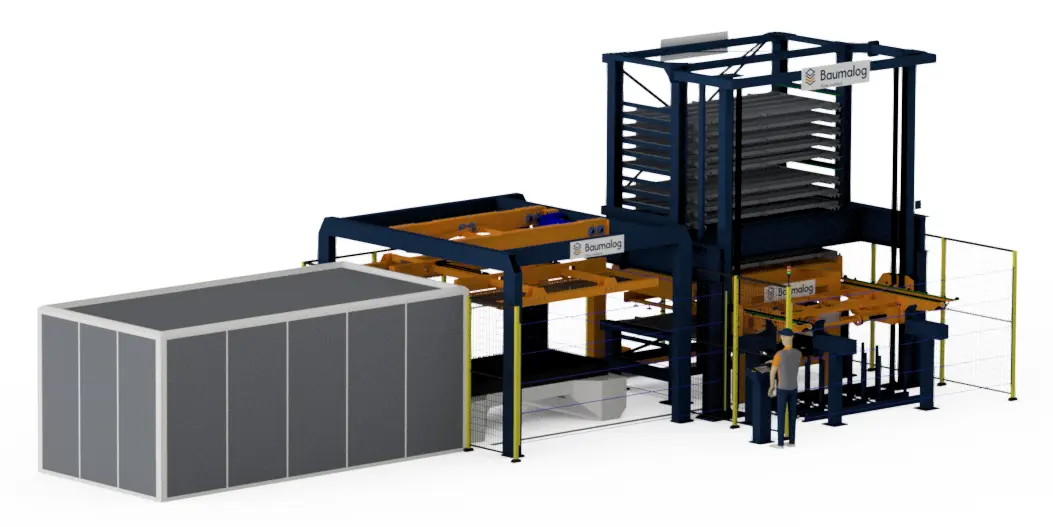
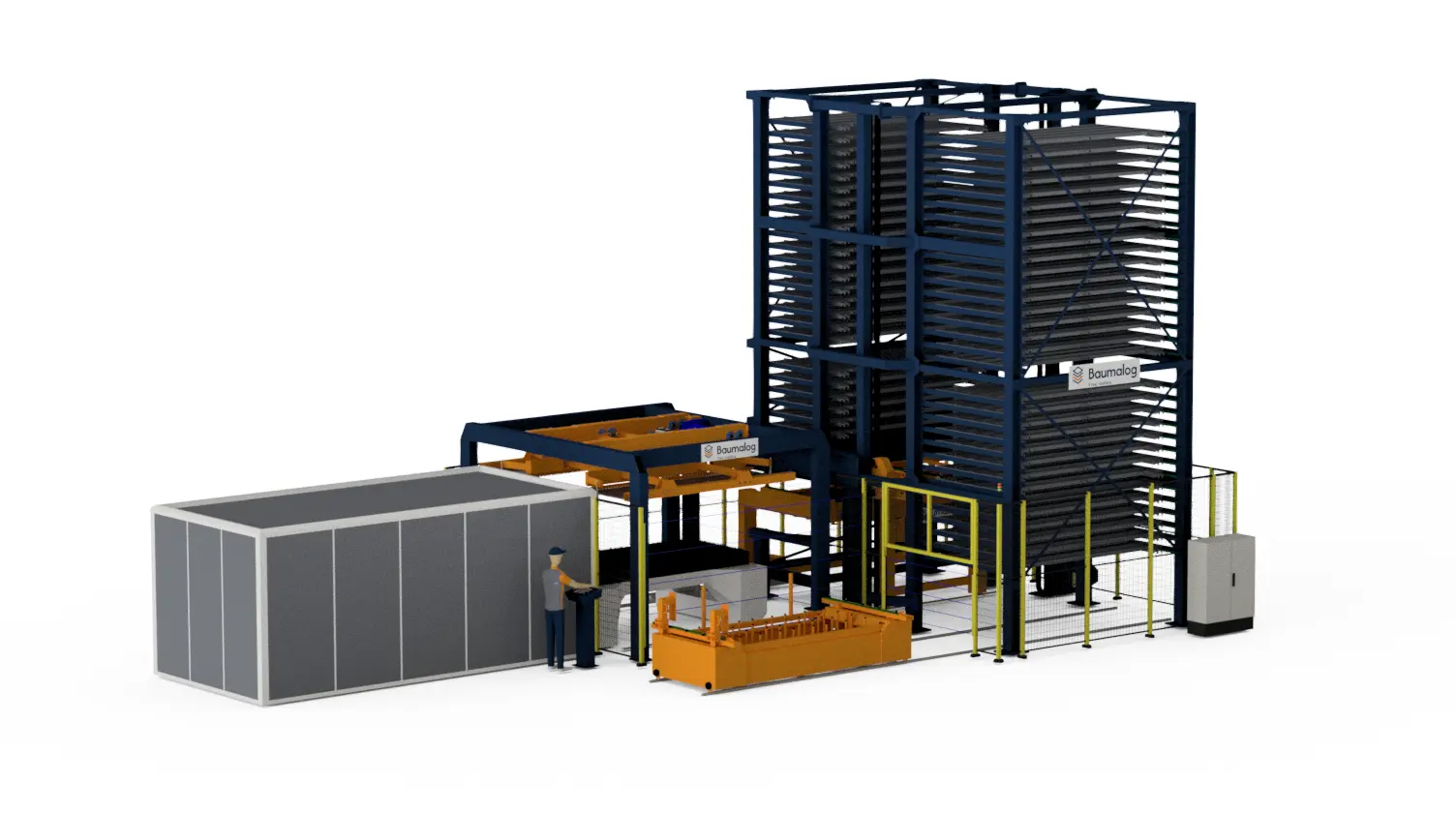
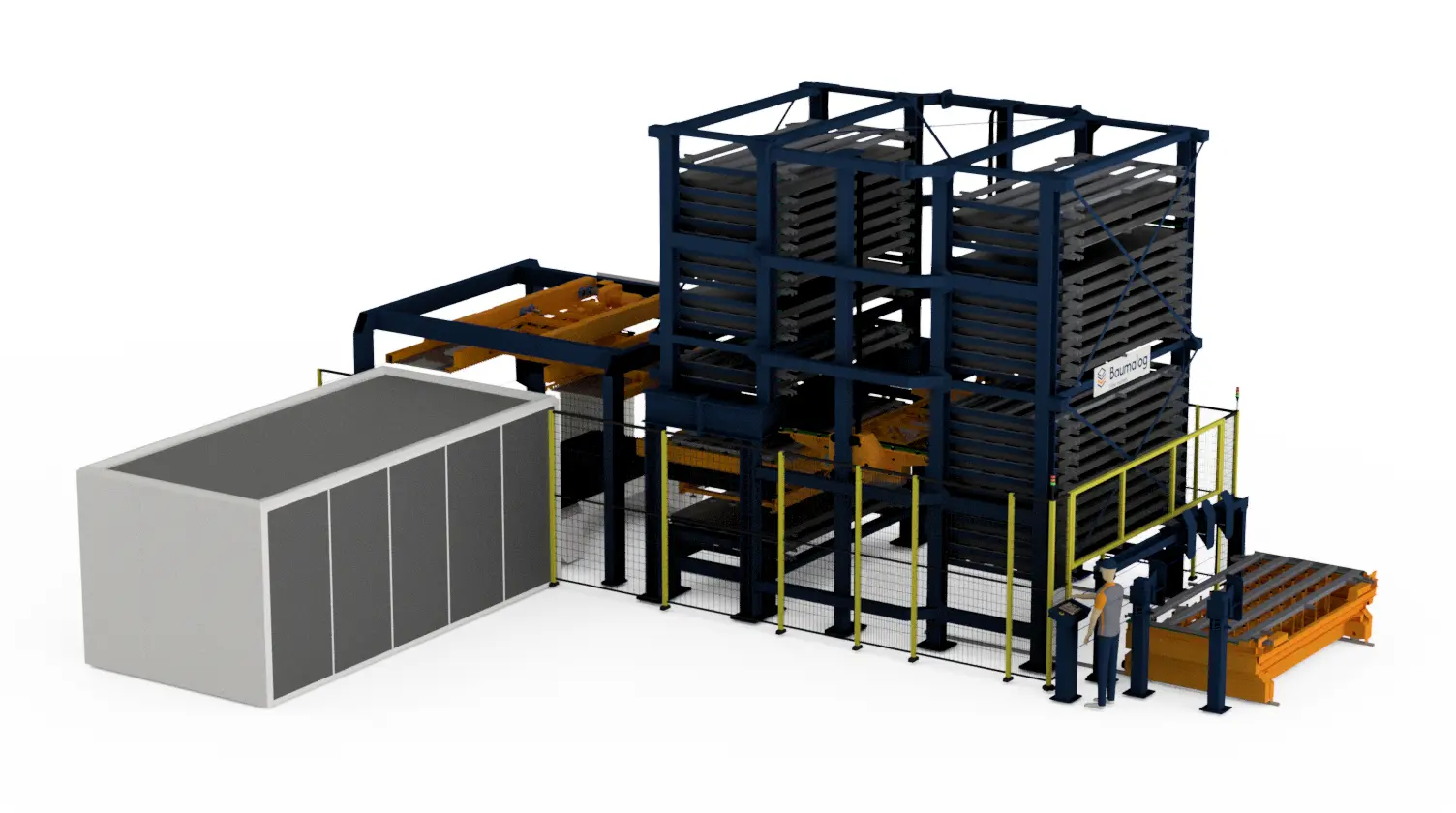
Storage part parameters for a 6-meter-high system. Sheet separation, single-sheet pickup check and thickness measurement are standard in every configuration:
| Sheet format | Shelf load capacity | Maximum stack height |
|---|---|---|
| 3000 × 1500 mm | 3000 kg | 90 mm |
| 4000 × 2000 mm | 5000 kg | 90 mm |
| 6000 × 2000 mm | 5000 kg | 53 mm |
A laser cutter work plan linked to material available in storage
The Flower software links the laser cutter's task queue with the storage stock. A task is not just a program to run: it has assigned material, the shelf it will be taken from and the place it will go after cutting.
A plan linked to storage stock
The system itself checks whether the required material is in storage and selects the shelf for the next task in the queue.
Program import and task queue
Programs from CAD/CAM go into a shared queue. The order can be planned in advance and modified during the shift.
Material and shelf management
Flower Store keeps stock levels, sheet locations and storage operations, from the operator panel and through a browser.
Execution control and history
The operator sees the queue, execution progress and situations that need a response. Completed tasks are recorded in the history.
Modules chosen for the scope of the project
The typical scope is Flower Store for storage operation, Flower Plan or Flower Pro for cutting planning and Flower Link for integration with higher-level systems.
One Baumalog software ecosystem
The same environment supports sheet metal storage systems and larger production systems, so later expansion does not mean changing software.
Agreed data exchange between the laser cutter, storage system and IT systems
A cell with a storage system requires communication to be agreed on several levels at once: with the laser cutter, with the storage system and with the company's IT systems. We handle this scope within one project.
Laser cutters of many brands
We have implemented projects with lasers of different manufacturers, generations and formats. The automation is not tied to one machine brand.
A new machine brand
Integration is possible if the laser cutter provides an API or interface for exchanging the required data and signals. We analyze both the machine and its communication with the storage system and the plan.
CAD/CAM
We import programs prepared in CAD/CAM into the queue together with information about the required material, which the system finds in storage.
ERP, MES and higher-level systems
Orders, stock levels and execution feedback can be exchanged with systems already running in the company.
A new or an existing laser cutter
The cell can be designed together with a new machine or built around a laser that has been working in the hall for years.
Scope agreed before the project
Before work starts, we agree which data and signals need to be exchanged between the storage system, the Loader, the laser cutter and IT systems.
Full access to the laser cutter table despite the storage system
An expanded cell must not cut operators off from the machine. Cleaning, grid replacement, service and an urgent job outside the queue must remain possible even with a storage system and Loader next to the laser cutter.
In practice, this means that:
Further stages of development without changing the whole concept
A complete single-cutter cell can be enlarged step by step: by increasing storage capacity, adding collection points or moving towards a system serving several machines.
More shelves in storage
Increasing the number of shelves directly lengthens the queue the system can process without replenishing material.
A larger storage system
Moving from a single-tower to a two-tower storage system, or expanding the existing system, increases capacity and the variety of available materials.
Additional collection points
More locations for cut sheets means that part sorting affects the continuity of the laser cutter's work even less often.
Moving towards SmartFlow
When more lasers arrive in the hall, the storage system can become a shared source of material for the whole cutting center.
A complete cell project for one laser cutter
The storage system, loading automation, safety systems, software and machine integration come from one supplier. There are no gaps where responsibility for the system is blurred between companies.
Storage and automation from one source
We design and manufacture sheet metal storage systems and laser cutter automation ourselves, so both elements are created as one system, not two separate purchases.
Automation independent of the machine manufacturer
We do not sell lasers: we automate the ones the customer has chosen. We have proven integrations with laser cutters from many manufacturers.
Our own Flower software
We develop the software layer ourselves, so scope changes, integrations and later expansion do not require bringing in more suppliers.
Designed for the specific hall layout
We arrange the storage system, Loader and laser cutter to suit the actual shape of the hall and the orientation of the machine, not a catalog diagram.
See our working systems
See projects where an automated sheet metal storage system and a Loader work with one laser cutter as a complete production cell.
Automation of two TRUMPF laser cutters using Loader 3015 and MultiLoader systems with a TwinTower automated storage system at Marbo Sport.
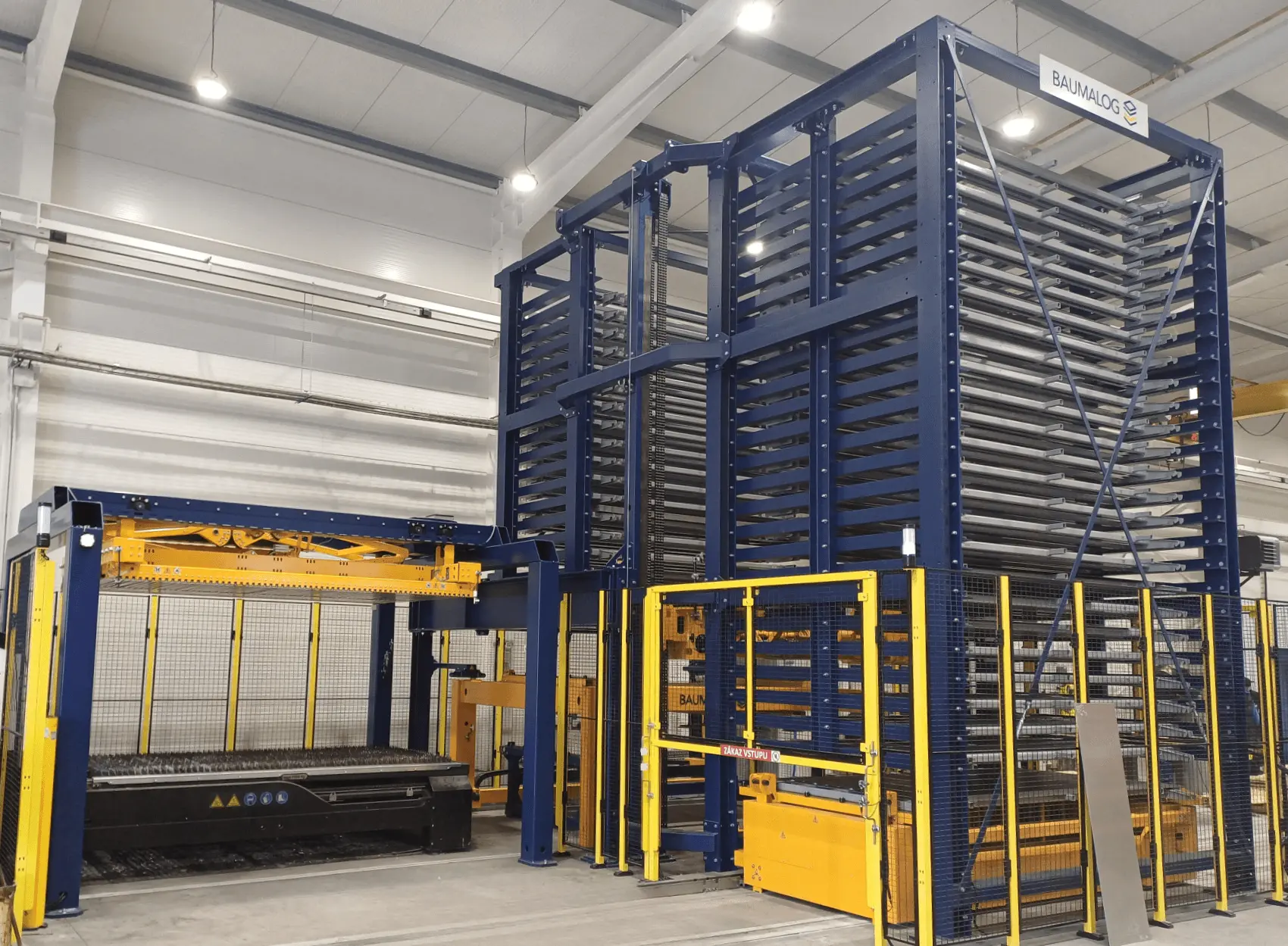
Automation of an Eagle laser cutter at R3Stav with a Loader system and a TwinTower automated storage system.
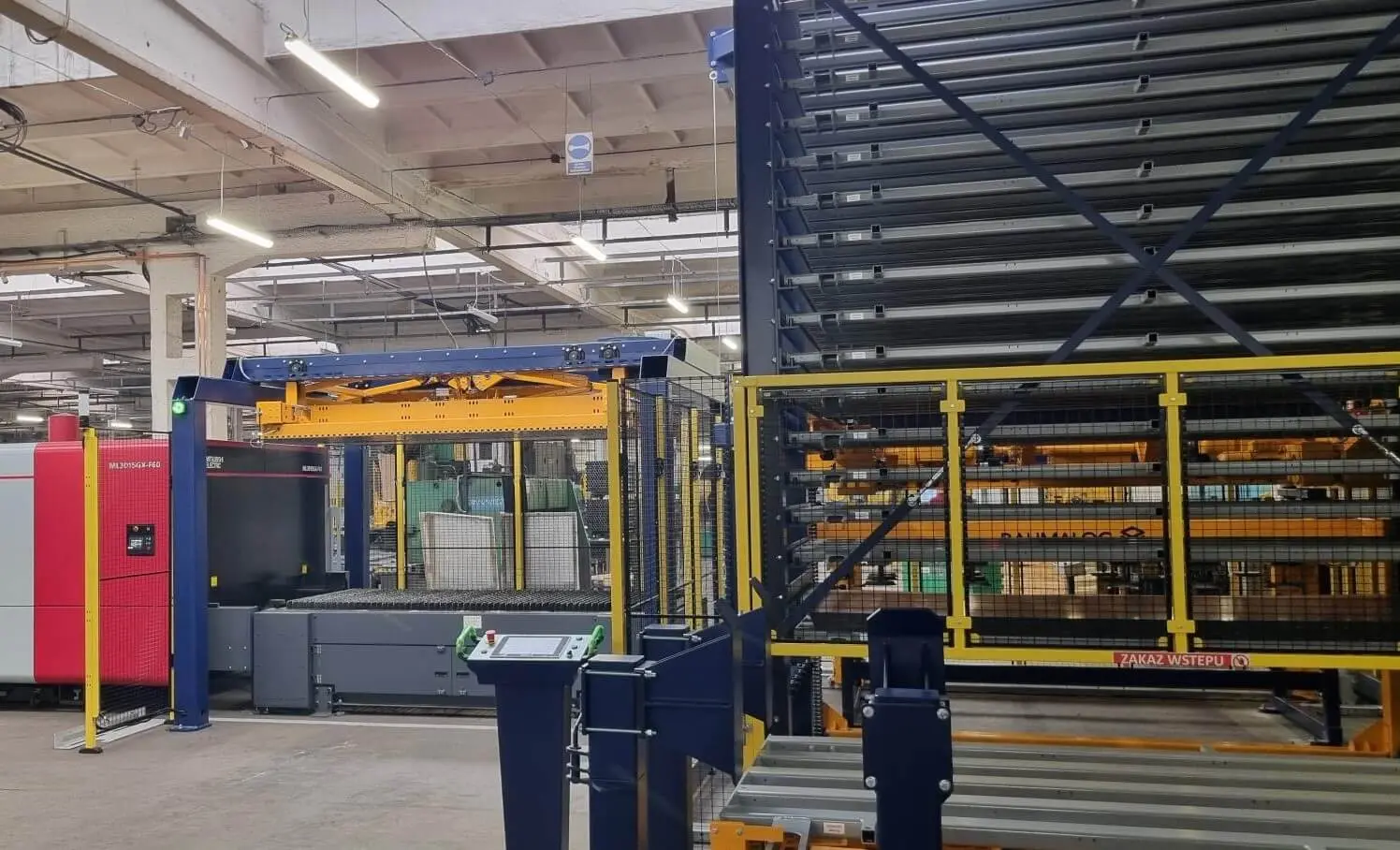
Automation of a Mitsubishi laser cutter at Altrad Montaż Sp. z o.o., a manufacturer of scaffolding and formwork.
Tell us about your process
We will select a solution tailored to your production.
160+ installations
Trusted by manufacturing plants across Europe.